Auto Europe

- North America
- Central America
ELECTRIC CARS



Exclusive Savings as a Member!
As a member, you will benefit from exclusive and unique discounts. Book now and save! Sign in or create an account here.
Electric Car Rental
Why Choose an Electric Car? 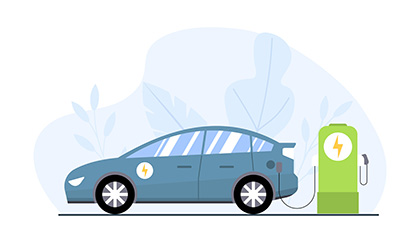
An electric vehicles is the way of the future. The Electric cars are better for the environment with less pollution. By choosing to drive an electric vehicle, you are helping to reduce harmful air pollution from exhaust emissions. The cost of having an electric car is around 40% less than that of a traditional petrol-powered vehicle. The latest battery technology means an autonomy of up to 400km on a single charge.
- Comparative prices
- Emissions-free driving - Eco-friendly
- A new driving experience - Quiet driving
Frequently Asked Questions About Electric Cars
How do electric vehicles work?
Electric cars function by plugging into a charge point and taking electricity from the grid. They store the electricity in rechargeable batteries that power an electric motor, which turns the wheels.
Why are electric vehicle better?
No fuel required so you save money on gas! Paying $0.10 per kW is the equivalent of driving on gasoline that costs less than $1 per gallon. Environmental friendly as they do not emit pollutants. Better Performance.
What are the advantages of electric cars?
- Cleaner environment
- No congestion charge
- Lower running costs
- Renewable electricity tariffs
- Better driving experience
- Government funding
- Free parking
- Reduced noise pollution
- Increased resale value
What are the benefits of electric cars?
- Reduced fuel costs
- Enhanced energy security
- Reduced air pollution (with associated health benefits)
- An improved driving experience
- Greenhouse gas emissions can be eliminated if EVs are charged using renewable energy
How are electric cars better for the environment?
Less pollution: By choosing to drive an EV you are helping to reduce harmful air pollution from exhaust emissions. An EV has zero exhaust emissions, but still creates a degree of greenhouse gas emissions when it is charged from the electricity grid.
How do you charge my Electric vehicle?
Electric cars are charged by connecting a cable with plugs between a charger and the charge socket on the vehicle. This can be done either at a public charging station or at home using a home charger or by using a simple 3-pin 10A plug charger.
How long does it take to fully charge an electric vehicle?
This will depend on what charger is used and how much charge is needed.
- For a 50kW DC charger at a public charging station, it takes approximately 45 minutes to achieve 80% charge from zero.
- For a 7.2kW AC installed home charger or 22kW AC public charger, it takes approximately 7 hours.
- The supplied 10A 3 pin trickle charger takes approximately 33 hours.
Can I charge my electric vehicle at any public charging station?
The EV can be charged at any charging station, if there is a compatible connector and as long as you have an account with the charge point provider. There are some public charging stations owned by specific manufacturers; these can only be used by vehicles from that manufacturer.
Can I charge the vehicle outdoors in the rain?
Yes, there is no risk to people near the charger or the vehicle itself. The charging system and cables are all tested to ensure they can be used in the rain.
How much does it cost to charge an electric car at a public charging station in Australia?
The costs of public charging vary. Some locations offer a flat rate, and others charge per KW or for time used. For an overview, refer to the PlugShare site, which will tell you all relevant details including costs for each location.
How far can an electric vehicle travel on a single charge?
Until recently, one of the biggest limitations of electric cars was their range. Now, in Australia, you can access electric cars that can travel more than 500km on a single charge. Because most Australians live in cities and have an average daily commute of around 35km, EVs have more than enough range for the vast majority of users without needing to recharge. Make sure to return the EV with the agreed-upon charge. Some suppliers may ask for the electric vehicle to be returned with a certain amount of charge, whereas others may request that the car be returned with full charge. A one-time recharge fee may apply if the vehicle is not brought back with the amount of charge required, per the supplier's terms and conditions.
How can you find electric charging stations?
The locations of charging stations are available in the Satellite Navigation system of the EV, although this would need regular online updates to keep it accurate. Alternatively, there are a number of third-party applications that can be downloaded to on smartphone devices such as:
PLUGSHARE: Which are regularly updated with the latest charging stations, charging station type and location.
CHARGEFOX: Which can also provide live status information about charging stations such as Status, Location, Type, Online, Offline, In use, etc.
If the battery runs out of charge, what will happen to the car?
No, hybrid vehicles do not need to be charged as the battery recharges while you're driving, so it's always ready to go.
Can my Hybrid battery run out of charge?
Like a petrol or diesel vehicle, the car will eventually stop if the tank runs out of fuel, so an electric vehicle will stop if the battery runs out of charge. In the unlikely event this happens, with an EV you can call 1800 625 035 for Roadside Assistance to help get you to the nearest charging station. However, most EVs provide information to the driver about predicted range and also provide increasing warning levels as the charge in the battery gets low.
Can I be charged if I stay connected to a charger once my car is charged?
Yes, in most cases, you will. This is called an idle fee. You are encouraged to unplug and move the vehicle from its charging space once you are charged, to allow for another use to access. Idle fees will be listed in the charging information in the Plugshare app.
Do electric cars break down more?
No, they don't. An electric vehicle is less likely to break down than a petrol or diesel car because it has fewer moving parts.
What electric cars cars are on offer for car hire?
- MG ZS Essence Electric or similar
- Byd Atto Electric or similar
- Fiat 500 Electric or similar
Plan Your Trip With the Electric Vehicle Route Planner
Worried you mightn't be able to make the trip you want with an electric car? Plan your trip in advance with the EV route planner. Find available charging stations below with PlugShare map.
Suppliers Who Offer Electric Vehicles
 |
 |
- Home
- Specialty Vehicle Rental
- Electric Cars